why real estate agencies are losing leads from property portals | November 20, 2026 | 9 min read | Ezora Research Team
Real estate agencies are still losing leads from property portals in 2026 because of a structural mismatch between how portals distribute inquiries and how agencies are staffed to respond. Portals such as 99acres, MagicBricks, and Housing.com send the same buyer inquiry to several competing brokers at once. The agency that dials first, not the one with the best listing or price, usually wins the conversation. Add after-hours gaps, missed calls during site viewings, and inconsistent follow-up, and agencies lose leads even though they spend heavily to generate them.
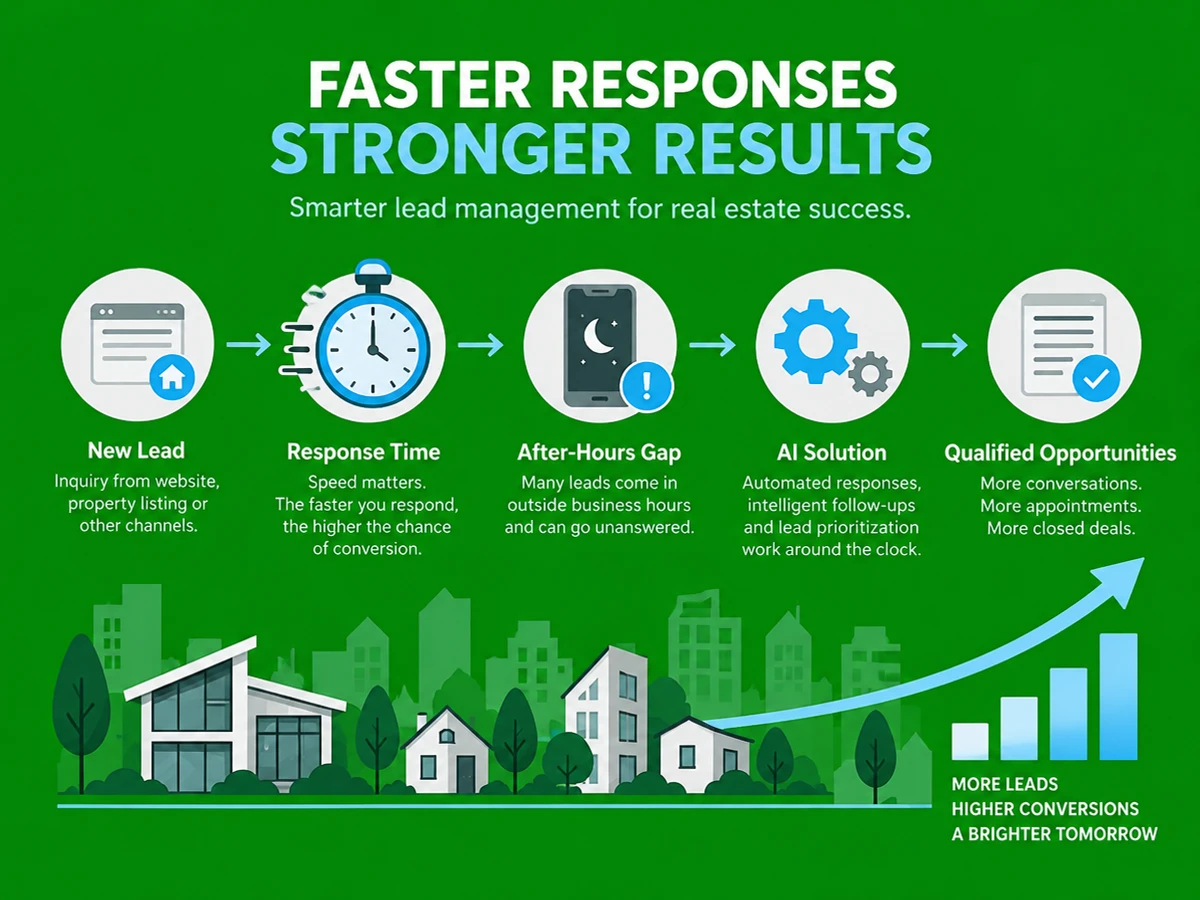
This is rarely a lead-quality problem. It is a **lead-handling problem**. Industry benchmarking puts the average first response time on Indian portal leads at 4 to 6 hours, by which point a motivated buyer has often already called three or four other brokers from the same inquiry pool. Knowing where leads leak, and which **property portal lead management strategies** close those gaps, is a competitive necessity.
In Indian real estate, the deal rarely goes to the best agency. It goes to the first one that picks up the phone.
Why Real Estate Agencies Are Losing Leads from Property Portals in 2026: The Core Problem
Portals sell non-exclusive inquiries into a crowded, slow-moving response system. Portals distribute shared buyer inquiries to four to seven competing brokers at the same time, turning every lead into a race rather than a handoff. Agencies that treat portal leads like exclusive CRM entries, rather than contested inquiries with a shrinking window, **lose most of the race** before anyone picks up the phone.
Where the Leakage Actually Happens
- Shared lead distribution: The same buyer inquiry reaches multiple agencies at once, so contacting a lead in under 15 seconds produces an 82% connection advantage over slower competitors.
- Delayed first contact: Between 70% and 80% of real estate leads in India go cold purely because of delayed or missed responses, not because the property or price was wrong.
- Thin follow-up cadence: The average Indian real estate agent makes just 1.3 contact attempts before giving up on a lead, far short of the multi-touch cadence buyers need.
- Fragmented broker market: RERA-registered agents crossed 105,712 in 2025, up 19.1% year-on-year, yet this is only 12-20% of an estimated 5-9 lakh active brokers nationally, meaning most portal leads are chased by informally run teams without structured systems.
| Leakage Point | What Happens | Typical Impact on Portal Leads |
|---|---|---|
| Shared distribution | Same inquiry sent to 4-7 brokers | First responder wins most conversations |
| Slow first call | 4-6 hour average response | Buyer already engaged with a faster agency |
| Weak follow-up | 1.3 average contact attempts | Warm leads marked "dead" prematurely |
| No after-hours coverage | Evening/weekend inquiries ignored | Up to 35-40% of inquiries missed entirely |
Key Takeaway: Portal leads are shared, time-sensitive, and unforgiving of delay. Agencies running manual telecalling queues without a structured speed-to-lead system are, by design, **losing most winnable deals** before the first call connects. For deeper context, see 7 Reasons Real Estate Companies Lose Leads (And How ....
The Speed-to-Lead Problem: How Response Time Decides Who Wins the Deal
Response time is the single largest controllable factor behind why real estate agencies are losing leads from property portals. In India's residential market, speed is often the **deciding factor, ahead of price, location, or listing quality**.
What the Numbers Show
- The two-hour cliff: Developers receiving 100 to 300 leads a month from property portals lose 35% of those leads to competitors within two hours of submission, because response time runs past the buyer's attention window.
- The real target: After automation is implemented, the target response time for portal and broker leads is under two minutes, not the hours most teams currently take.
- Conversion rate ceiling: The average real estate lead conversion rate in India sits at just 1-3% across 99acres, MagicBricks, and Housing.com inquiries.
- Automation lift: Agencies using a structured CRM with follow-up automation consistently convert at 3.5-6% on portal leads, roughly double the unmanaged average.
| Response Time Window | Typical Outcome | Portal Lead Behavior |
|---|---|---|
| Under 60 seconds | High connect probability | Buyer still actively comparing options |
| Under 2 hours | Moderate connect probability | Buyer likely contacted other agencies too |
| 2-6 hours | Low connect probability | 35%+ of leads already gone cold |
| 4-6 hours (industry average) | Very low connect probability | Buyer has already engaged a competitor |
A sales head at a Pune developer reviewed a month's funnel across three portals: 4,180 leads arrived, only 1,090 were ever called, and 74% of the funnel never received a single dial.
Most of us have seen this in everyday life: the shop that answers first gets the sale. Buyers behave the same way, only faster.
Key Takeaway: Response-time discipline, not lead volume, separates agencies converting at around 1% from those converting at 5-6% on the same portal inquiries. Fixing speed-to-lead is the **highest-leverage change** any agency can make. For deeper context, see Real Estate Lead Response: Why 5 Minutes Makes or ....