AI for real estate agencies in India | Updated October 2026 | 11 min read | Ezora Editorial Team
AI for real estate agencies in India means using automated voice and messaging agents, predictive pricing tools, and CRM-integrated workflows to capture leads, qualify buyers, and follow up on every inquiry, without depending entirely on manual phone calls or WhatsApp replies. This guide explains what has changed, which use cases matter most, and how agencies can adopt AI without disrupting existing sales workflows. AI adoption in Indian corporate real estate has surged from under 5% in 2023 to 91% in 2025, and it is changing how properties are designed, sold, and managed.
The urgency is clear. India's real estate sector is expected to grow from USD 482 billion in 2024 to USD 1 trillion by 2030, driven largely by buyers who expect an instant, mobile-first response. Agencies relying on a single receptionist or a shared WhatsApp inbox are losing deals to competitors who answer first and never let a lead go cold.
In a market where the first responder wins the deal, AI is not a convenience layer for real estate agencies in India. It is the difference between a booked site visit and a lead that quietly moves to a competitor.
What Does AI for Real Estate Agencies in India Actually Mean in 2026?
In practical terms, AI for real estate agencies in India refers to software that answers calls and messages, qualifies buyers by budget and location, books site visits, and logs every interaction in the CRM, all without replacing the human sales team. It has moved well beyond the chatbot experiments of 2022 and 2023.
From Chatbots to Full Front-Office Automation
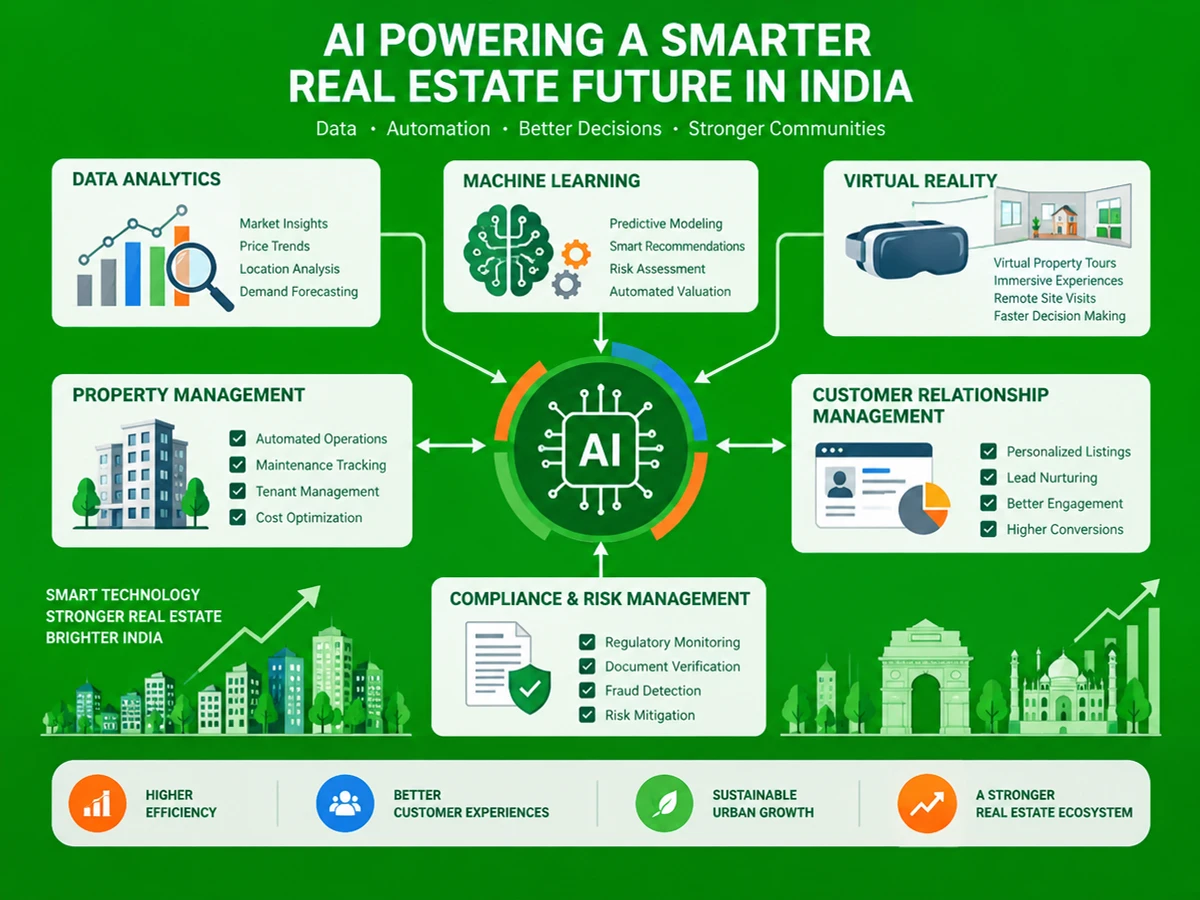
Early AI in Indian real estate meant virtual tours and basic chatbots. Major developers now apply it to construction monitoring and risk prediction, but for agencies the real action is the front office: the calls, WhatsApp threads, and lead forms where a buyer forms a first impression.
- Voice AI agents: Automated systems that answer inbound calls, call back missed leads within seconds, and qualify buyers by budget, configuration, and timeline in Hindi, English, or a regional language.
- WhatsApp automation: Agents that respond to inquiries, send brochures, confirm site visits, and nurture leads over weeks without manual intervention.
- Predictive pricing and analytics: Tools that analyze market data to suggest pricing, flag inventory risk, and forecast demand.
- CRM-native reporting: Real-time dashboards showing which leads were contacted, converted, or lost.
Key Takeaway: In 2026, AI is judged less by novelty and more by coverage: how many calls get answered, how many leads receive a reply within minutes, and how consistently follow-up happens across the sales cycle. For deeper context, see Best AI AI Writing Tools for Real Estate Agents 2026 -.
Why Is AI Adoption Accelerating So Fast in Indian Real Estate?
Buyer behavior moved to mobile and WhatsApp faster than agency staffing models could keep up, and institutional capital began rewarding data-backed operations over manual, spreadsheet-driven sales floors. The result is one of the fastest technology adoption curves the sector has seen.
| Metric | 2023 / Baseline | 2025 / 2026 | Source Context |
|---|---|---|---|
| AI adoption in corporate real estate | Under 5% | 91% | JLL Global Technology Survey 2025 |
| India PropTech market size | N/A | USD 1.31 billion (2025) | USD 1.31 Billion market foundation established in 2025 |
| Projected PropTech market by 2034 | N/A | USD 3.82 billion | representing a resilient 12.26% CAGR |
| Institutional investment, Q1 2026 | N/A | USD 1.7 billion | in Q1 2026 alone |
| RERA-registered projects (cumulative) | N/A | 76,000+ projects, 65,000+ agents | progressive government reforms like RERA, which has registered more than 76,000 projects and more than 65,000 agents by 2024 |
The Gap Between Adoption and Results
Fast adoption has not automatically produced results. Corporate real estate AI adoption jumped from under 5% to 91% in two years, yet only about 5% of firms report hitting their AI goals.
- Pilot fatigue: Many agencies have tested chatbots or dialers without integrating them into daily workflows, so adoption looks strong on paper while impact stays small.
- Unclear strategy: Over 50 per cent of real estate companies in India aim to integrate operations with artificial intelligence, but unclear strategies and an experimental phase remain a roadblock.
- Institutional pressure: Investors increasingly favour developers who can produce reliable, data-backed timelines and budget reports.
Key Takeaway: The 91% figure signals momentum, not maturity. Agencies that pick one focused, high-frequency use case, such as answering every inbound call and WhatsApp message, usually see results faster than those chasing a broad AI strategy. For deeper context, see Estate (land).