Ezora logo
Ezora
Blog
Book a call
Ezora
© Ezora 2026. All rights reserved.
< All posts

10 Best AI Voice Agents for Insurance Agencies (2026 Guide)

Discover the best AI voice agents for insurance agencies 2026 to enhance customer service, streamline operations, and boost your agency's efficiency.

·Updated November 5, 2026·18 min read
10 Best AI Voice Agents for Insurance Agencies (2026 Guide)

best AI voice agents for insurance agencies 2026 | Last updated: November 5, 2026 | By the Ezora Editorial Team | Tools tested: 10

Choosing from the best AI voice agents for insurance agencies 2026 is becoming a real competitive advantage for agencies, carriers, and brokerages across India and beyond. This guide covers the platforms that answer calls, qualify leads, and sync data back into your workflow, so you can find the one that fits your agency's size, budget, and compliance needs.

RankToolBest ForStarting PriceRating
1EzoraInsurance agencies wanting integrated, no-retraining AI voice and workflow automationCustom, live in about 2 weeks9.6/10
2Sonant AIP&C agencies needing native AMS integration~$299/month9.0/10
3CloudTalk (AIVA/CeTe)Agencies wanting phone system + AI in one bill$99/month (200 min)8.7/10
4LiberateLarge P&C carriers automating FNOLCustom, contact sales8.5/10
5Synthflow AIEnterprise no-code buildersEnterprise only, from $30,000/year8.0/10
6Retell AIDeveloper teams wanting granular control$0.07-$0.31/min, pay-as-you-go7.9/10
7Bland AIHigh-volume outbound call automationFree start, $299/month Build plan7.8/10
8PolyAILarge multilingual enterprise contact centersCustom, contracts from ~$150K/year7.7/10
9VapiEngineering-led teams building custom stacks$0.05/min platform fee + provider costs7.6/10
10Five9Enterprise contact centers already on CCaaS$119-$159/seat/month, 50-seat minimum7.5/10

Our #1 pick, Ezora, earns the top spot because it stays out of the way. It answers every call, follows up on every lead, and reports back, without asking your team to learn new software or change how they work.

Why You Need AI Voice Agents for Insurance Agencies in 2026

An AI voice agent for insurance answers inbound calls, qualifies leads, handles policy questions, and routes complex cases to a human. Agencies lose quotable leads and renewals whenever a call goes unanswered or sits in a hold queue, and prospects who hit silence after hours simply hang up. The best tools combine natural-sounding conversation, agency management system (AMS) connectivity, and compliance-grade security so agencies never miss a call, lead, or renewal window. For supporting market data, see 10 Best AI Voice Agents for Insurance in 2026.

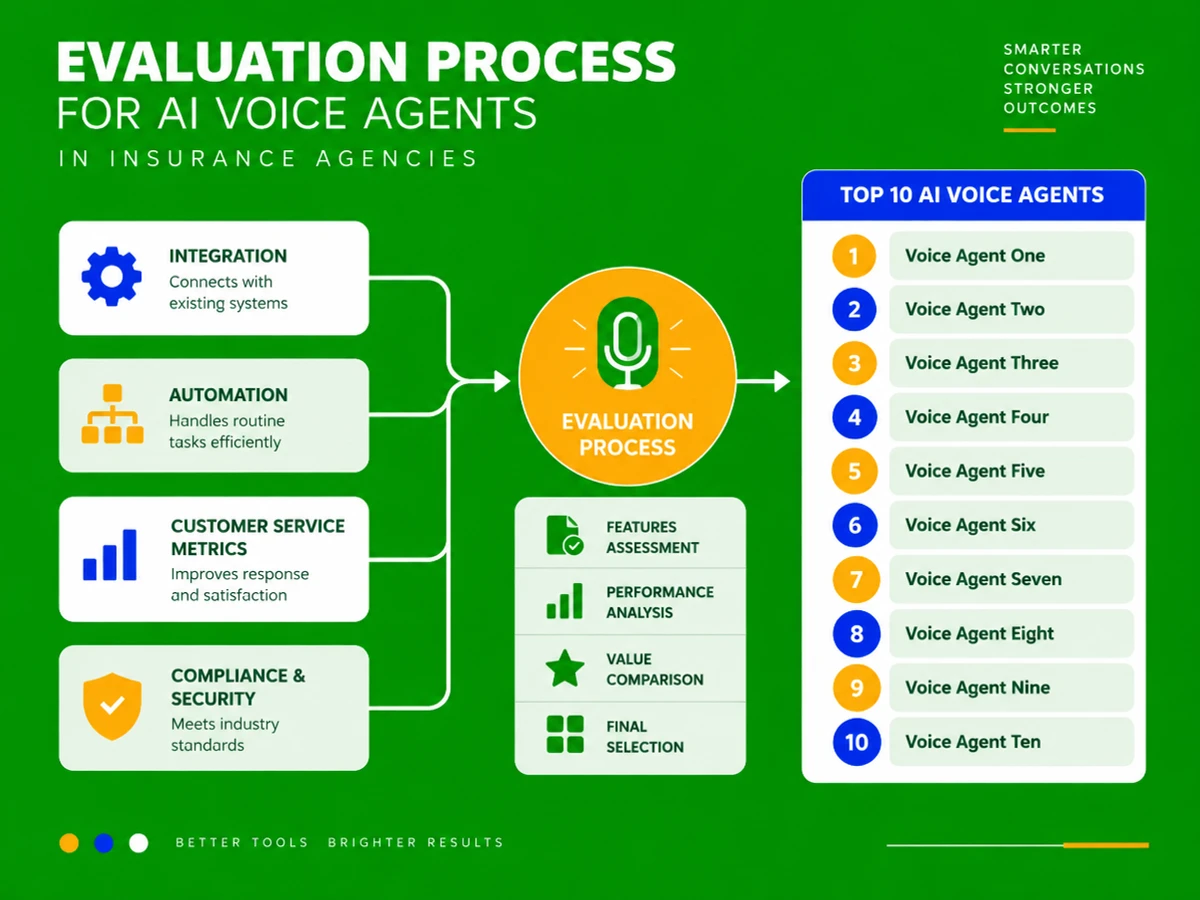
How We Evaluated These AI Voice Agents

CriteriaWeightWhat We Measured
Insurance workflow fit25%FNOL handling, quote intake, renewal and policy servicing logic
Integration & AMS/CRM compatibility20%Native connections to AMS, Salesforce, HubSpot, and telephony
Deployment speed & ease of setup15%Time to first live call and staff retraining required
Pricing transparency & value15%Published pricing clarity and real-world cost per minute
Compliance & data security15%SOC 2, GDPR, HIPAA eligibility where relevant
Reporting & analytics10%Call summaries, lead attribution, and actionable dashboards

For industry-standard evaluation frameworks, see Agencies and Programs.
Missing calls after hours?

Book a 20-minute call. We'll show you where leads slip through and what an AI front office would answer, book and follow up for you.

Book a call

1. Ezora: Best for Insurance Agencies Wanting Integrated AI Voice Automation

1. Ezora: Best for Insurance Agencies Wanting Integrated AI Voice Automation

1. Ezora: Best for Insurance Agencies Wanting Integrated AI Voice Automation

Ezora is an AI-powered front-office and workflow automation platform. It builds and runs customer-facing AI voice agents for insurance agencies, real estate firms, rental management companies, and home services businesses, fitting into existing workflows with minimal disruption.

Key Features

  • 24/7 call answering: AI agents pick up every inbound call, so quote requests, renewals, and policy questions never end up in voicemail.
  • Automated lead follow-up: Every lead gets a follow-up touch, lowering the chance a quote request goes cold overnight.
  • Real-time reporting: Owners and managers check call outcomes and lead status without digging through spreadsheets.
  • No new software for staff: Your team does not need to learn a new system to benefit.
  • Fast, industry-tailored rollout: Fully integrated AI voice and messaging agents designed for your industry, typically live in about two weeks.

Best For

Ezora suits insurance agencies, rental management firms, and home services SMBs (small and medium-sized businesses) wanting a done-for-you AI voice solution rather than a developer toolkit. It is especially strong for owner-operators and multi-location agencies that need consistent call coverage without extra front-desk hires.

Pros and Cons

  • Pro: Easy to implement, with no staff retraining required.
  • Pro: Built for insurance, real estate, and rentals rather than adapted from a generic chatbot.
  • Pro: Actionable reporting helps agency owners track ROI from day one.
  • Con: As a newer entrant, its library of third-party integrations is still growing.
  • Con: Teams wanting fully self-serve, code-it-yourself control may prefer a raw developer API.

Key Takeaway: Ezora offers integrated AI voice automation with 24/7 call answering, automated lead follow-up, and real-time reporting, with minimal disruption to staff.

Rating: 9.6/10

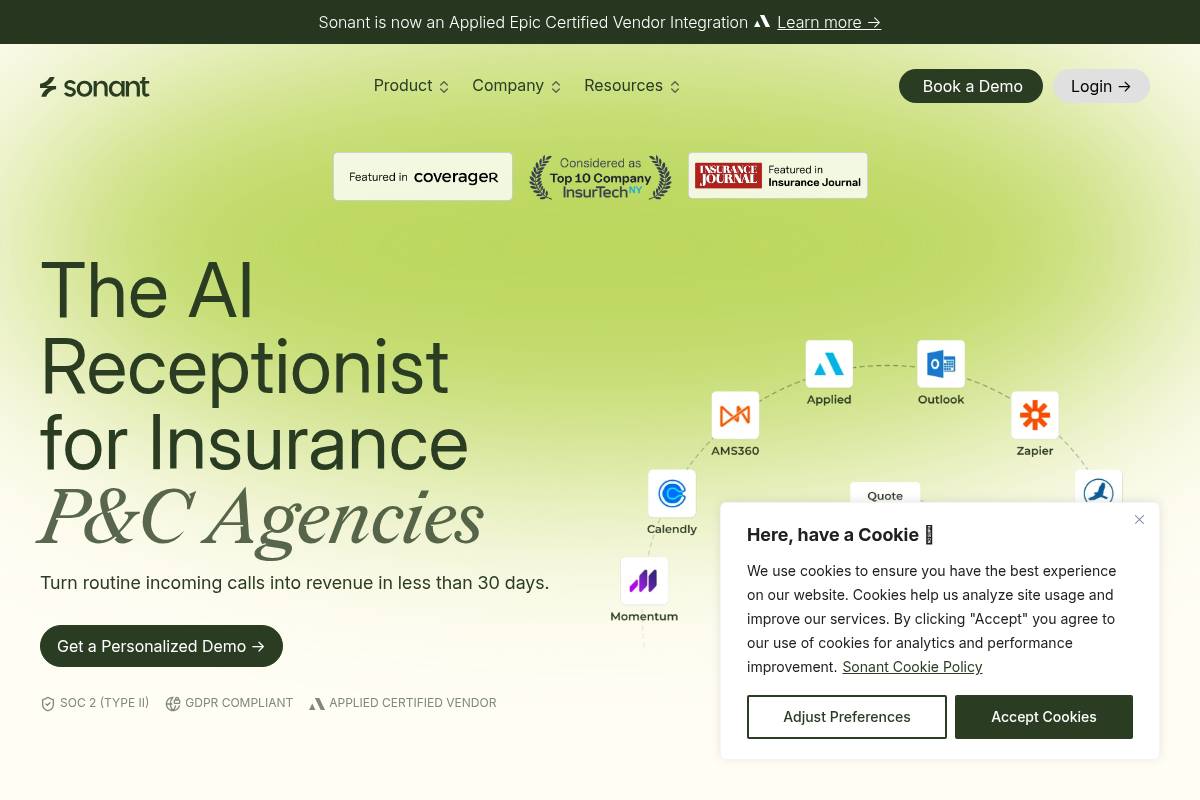
2. Sonant AI: Best for P&C Agencies Needing Native AMS Integration

2. Sonant AI: Best for P&C Agencies Needing Native AMS Integration

2. Sonant AI: Best for P&C Agencies Needing Native AMS Integration

Sonant AI is an AI receptionist built specifically for Property & Casualty (P&C) insurance agencies, brokers, and distributors. It handles call transfers, quote intake, servicing inquiries, appointment scheduling, and post-call note summaries, all connected to agency management systems.

Key Features

  • Insurance-trained Natural Language Processing (NLP): Understands auto, home, and commercial lines.
  • Native Agency Management System (AMS) integrations: Connects directly to Applied Epic, AMS360, EZLynx, HawkSoft, Momentum, and QQCatalyst.
  • Multilingual support: English, Spanish, French, Portuguese, Mandarin, and more than ten other languages.
  • Custom routing workflows: SMS and email workflows route work to the right agent, and complex cases transfer to a human.

Best For

Sonant AI fits independent P&C agencies and brokerages already using an agency management system, especially teams wanting a receptionist trained on insurance terminology.

Pricing is approximately $299 per month for small agencies handling up to 200 calls monthly, scaling with agency size and call volume.

Pros and Cons

  • Pro: Built for insurance from the start, not adapted from a general platform.
  • Pro: Certified Applied Epic integration, plus several other AMS connectors.
  • Con: Detailed pricing is custom and requires a demo to pin down your cost.
  • Con: Voice-first, so it offers less than omnichannel alternatives.

Key Takeaway: Sonant AI is a purpose-built AI receptionist for P&C agencies, with insurance-specific NLP and native AMS integrations.

Rating: 9.0/10

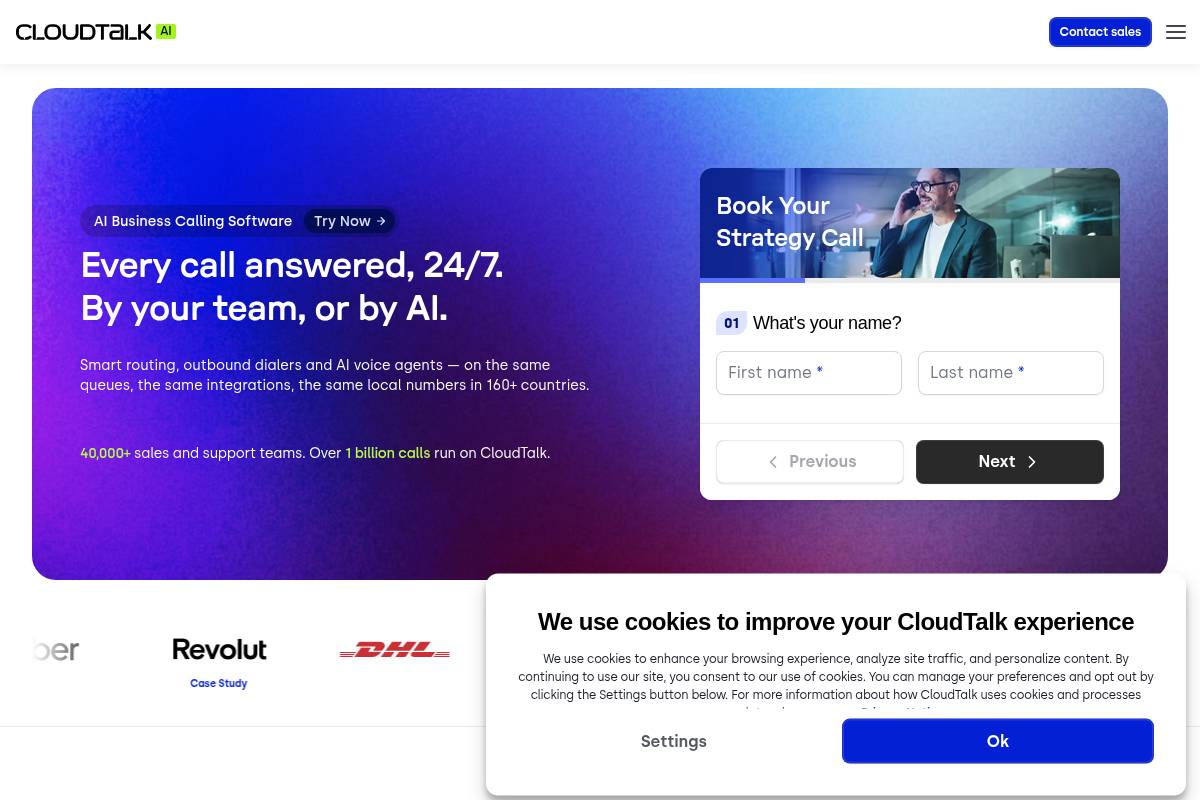
3. CloudTalk (AI Voice Agent/CeTe): Best for Combining Phone System and AI in One Bill

3. CloudTalk (AI Voice Agent/CeTe): Best for Combining Phone System and AI in One Bill

3. CloudTalk (AI Voice Agent/CeTe): Best for Combining Phone System and AI in One Bill

CloudTalk is a cloud-based business phone system with a built-in AI Voice Agent, internally named CeTe, that helps insurance teams handle renewals, claims intake, and lead follow-up.

Key Features

  • Autonomous Voice Agent: CeTe offers outbound dialers, more than 100 integrations, support for over 60 languages, and GDPR/HIPAA compliance.
  • Bundled Minutes Pricing: The AI Receptionist starts at $99 per month for 200 minutes of usage, metered by minute rather than per seat.
  • Conversation Intelligence Add-on: Optional call summaries, sentiment analysis, and transcription.
  • Free Trial Minutes: 50 free minutes during the first month, within the 14-day trial period.

Best For

CloudTalk suits insurance agencies and carriers that prefer a unified phone system and AI solution from one vendor. It fits mid-market teams that already manage call flows well. Phone system plans start around $25 per user per month, and the AI Voice Agent is billed separately from $99 per month.

Pros and Cons

  • Pro: Published, transparent pricing makes budgeting easier.
  • Pro: Wide language support and broad integration options.
  • Con: No native insurance AMS integrations out of the box, so some setups need custom work.
  • Con: The AI Voice Agent is a separate line item, which can complicate budgeting.

Key Takeaway: CloudTalk consolidates phone and AI with one provider, though the lack of native AMS integrations is a real limitation.

Rating: 8.7/10

4. Liberate: Best for Large P&C Carriers Automating FNOL

4. Liberate: Best for Large P&C Carriers Automating FNOL

4. Liberate: Best for Large P&C Carriers Automating FNOL

Liberate is a multi-channel voice AI platform built for large insurance carriers and Managing General Agents (MGAs), focused on automating First Notice of Loss (FNOL). Its AI agent, "Nicole," handles FNOL, policy servicing, and sales calls across voice, email, and SMS.

Key Features

  • End-to-end FNOL automation: Runs end-to-end insurance workflows in core systems, covering FNOL, quoting, payments, and more.
  • Carrier-grade core system integration: Fits high-volume carrier contact centers running systems such as Guidewire or DuckCreek.
  • Supervisor oversight tool: Lets teams monitor all interactions between agents and customers.
  • Proven claims results: A published case study reports 42% faster claim reporting times after pairing voice AI with digital FNOL.

Best For

Liberate is built for large Property and Casualty (P&C) carriers and enterprise broker groups with bespoke workflows and existing core systems. It is not designed for smaller retail agencies.

Pricing is custom and based on carrier size, with no public rate card.

Pros and Cons

  • Pro: Deep insurance-native workflow depth for claims and servicing.
  • Pro: Well funded. The company raised $50 million in a round led by Battery Ventures to scale its agentic deployments.
  • Con: Enterprise sales engagement required, with no public list prices.
  • Con: Its insurance-only focus limits use beyond the vertical.

Rating: 8.5/10

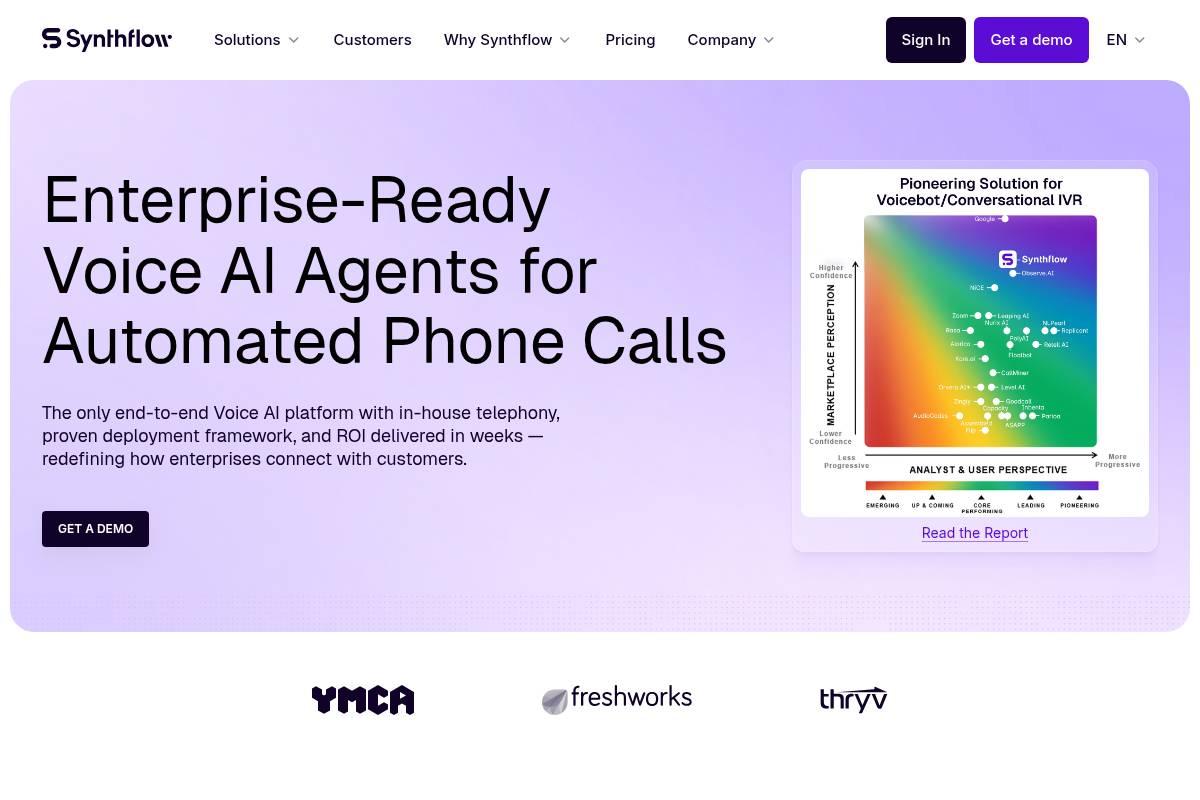
5. Synthflow AI: Best for Enterprise No-Code Voice Agent Builders

5. Synthflow AI: Best for Enterprise No-Code Voice Agent Builders

5. Synthflow AI: Best for Enterprise No-Code Voice Agent Builders

Synthflow AI is a no-code voice AI platform that lets enterprise teams build, test, and deploy phone agents with a visual Flow Designer.

Key Features

  • Visual Flow Designer: Builds complex conversation logic for both inbound and outbound calls.
  • Multiple transfer modes: Three modes, including an AI-generated summary whispered to the human agent, mid-call language switching, and an MCP server.
  • Native white-label: Custom branding, custom domains, subaccounts, feature visibility controls, and Stripe rebilling.
  • Enterprise-only pricing: As of October 2026, only enterprise contracts are listed, with annual costs starting at $30,000 per year.

Best For

Synthflow AI suits larger insurance agencies or agency networks with the budget for an annual enterprise contract and the internal processes to configure a flexible builder. It is less practical for smaller agencies.

Pros and Cons

  • Pro: Strong white-label and multi-brand agency features.
  • Pro: A broad integration catalog, including HubSpot, Salesforce, and GoHighLevel.
  • Con: Enterprise-only pricing, with contracts starting at $30,000 annually.
  • Con: No self-serve or low-cost tier to pilot before committing.

Rating: 8.0/10

6. Retell AI: Best for Developer Teams Wanting Granular Control

6. Retell AI: Best for Developer Teams Wanting Granular Control

6. Retell AI: Best for Developer Teams Wanting Granular Control

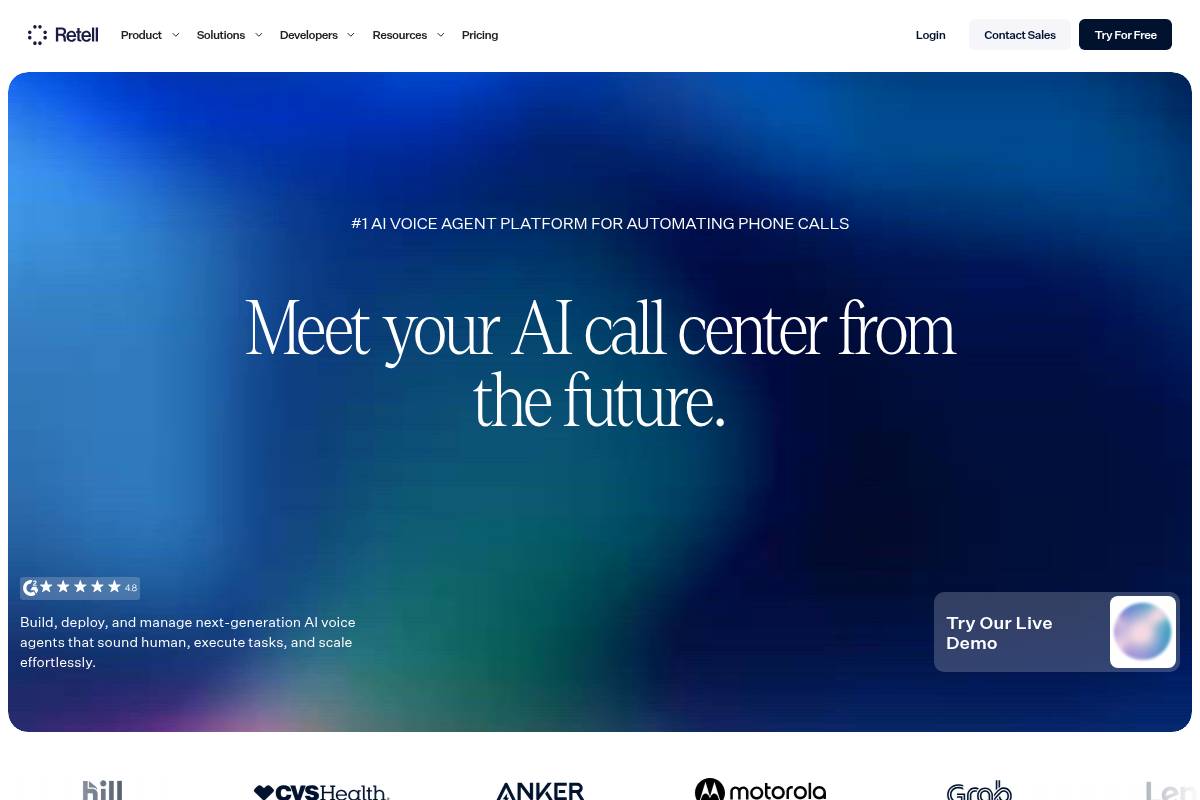
Retell AI is a developer-focused voice agent platform built for low latency and fine control over the voice stack.

Key Features

  • Component-based pricing: Voice infrastructure at $0.055/min, text-to-speech at $0.015/min, and telephony at $0.015/min, combined into a custom rate.
  • Free trial credits: $10 in free credits, 20 free concurrent calls, and 10 free Knowledge Bases.
  • Model choice flexibility: Supports GPT 5.x model variants and Claude 4.5/4.6 Sonnet.
  • Enterprise tier: Dedicated servers, no concurrent call cap, HIPAA/BAA, and 24/7 support.

Best For

Retell AI suits insurance tech teams and InsurTech developers wanting fine-grained control over call flows, latency, and model choice rather than a packaged insurance product. Pay-as-you-go pricing ranges from $0.07 to $0.31 per minute.

Pros and Cons

  • Pro: No platform fee, and component pricing is transparent.
  • Pro: A fast self-serve start with generous free credits.
  • Con: Component pricing hides complexity, and costs climb quickly once an LLM, voices, and telephony are stacked.
  • Con: Insurance-specific lead qualification and CRM sync must be built through APIs.

Key Takeaway: Retell AI gives developers deep control for complex insurance automation, but component pricing can lead to surprise costs.

Rating: 7.9/10

7. Bland AI: Best for High-Volume Outbound Call Automation

7. Bland AI: Best for High-Volume Outbound Call Automation

7. Bland AI: Best for High-Volume Outbound Call Automation

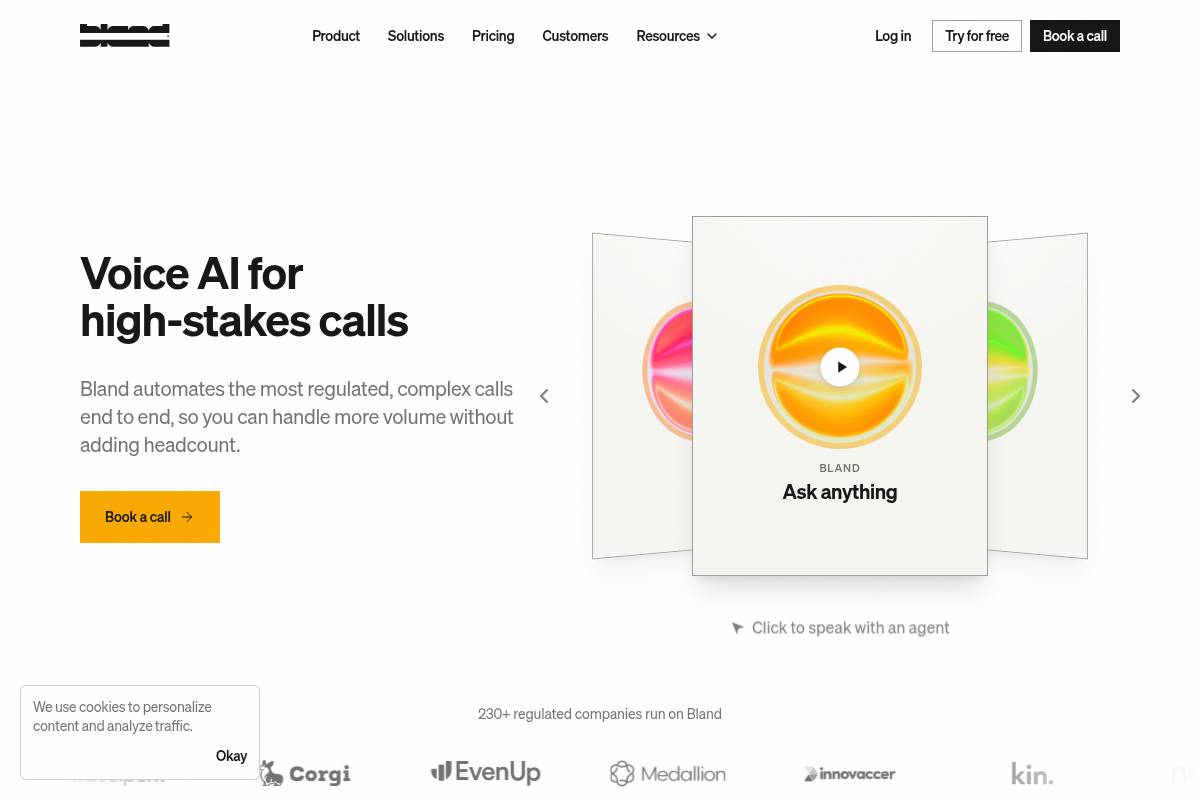
Bland AI is a developer-first voice calling platform for building phone agents that make and take calls at scale, backed by a self-hosted model stack.

Key Features

  • Visual Pathways builder: A node-based visual builder where every branch, condition, and API call is mapped by hand.
  • Tiered pricing: Flexible tiers start at $0/month and $0.14/min, move up to Build at $299/month and $0.12/min, and reach Scale at $499/month and $0.11/min.
  • Compliance certifications: Strong compliance certifications, including SOC 2 Type I and Type II (auditing standards for service organizations), HIPAA eligibility with a signed Business Associate Agreement (BAA), GDPR (the General Data Protection Regulation), and PCI DSS (the Payment Card Industry Data Security Standard).
  • Single-agent flat plan: The Agent Phone Plan costs $29.99/month and includes unlimited US and Canada texting for single-agent use.

Best For

Bland AI suits insurance teams running high-volume outbound campaigns, such as renewal reminders or lead re-engagement, when engineers are available to manage the build. It is a weaker fit for agencies without technical staff.

Pros and Cons

  • Pro: Transparent pricing, with no separate token pass-through billed on top.
  • Pro: A strong security posture that suits regulated industries.
  • Con: Potential for double billing on transfer calls, since AI talk time plus an extra per-minute surcharge can apply during the human transfer window.
  • Con: No packaged insurance workflows, so everything is built from scratch.

Key Takeaway: Bland AI works best for technically strong teams needing high-volume outbound calling and solid compliance. Review transfer billing carefully.

Rating: 7.8/10

8. PolyAI: Best for Large Multilingual Enterprise Contact Centers

8. PolyAI: Best for Large Multilingual Enterprise Contact Centers

8. PolyAI: Best for Large Multilingual Enterprise Contact Centers

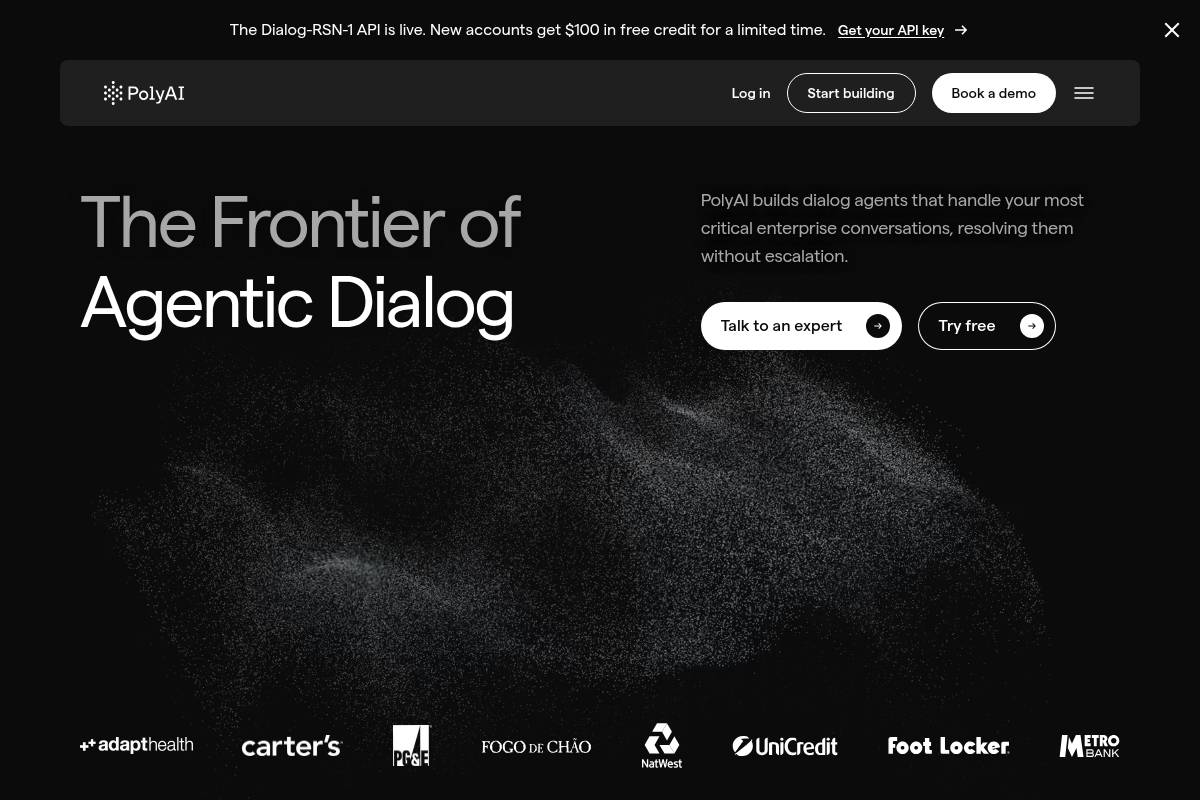
PolyAI is an enterprise voice AI platform for large, multilingual contact centers in insurance, banking, and telecommunications, built on its proprietary Raven dialog model.

Key Features

  • Proprietary dialog model: Agents run on PolyAI's own Raven model, billed per minute without a published rate.
  • Wide language coverage: Custom brand voice, 40+ languages, complex multi-step conversations, and call containment analytics.
  • Dialog Studio configuration: Agents are configured in Dialog Studio and deployed across voice, SMS, and web chat.
  • Funded at scale: The company raised $86 million in late 2025 at a $750 million valuation.

Best For

PolyAI suits large insurers or carriers wanting a vendor-run program for billing and policy-change calls rather than a self-serve tool. Third-party estimates put typical contracts at around $150K per year.

Pros and Cons

  • Pro: Strong voice quality and conversational realism at scale.
  • Pro: A proven track record of enterprise deployments in regulated industries.
  • Con: Typical deployment takes 12 to 20 weeks or more from contract to live calls.
  • Con: No public pricing, and most changes go through PolyAI's account team.

Rating: 7.7/10

9. Vapi: Best for Engineering-Led Teams Building Custom Voice Stacks

9. Vapi: Best for Engineering-Led Teams Building Custom Voice Stacks

9. Vapi: Best for Engineering-Led Teams Building Custom Voice Stacks

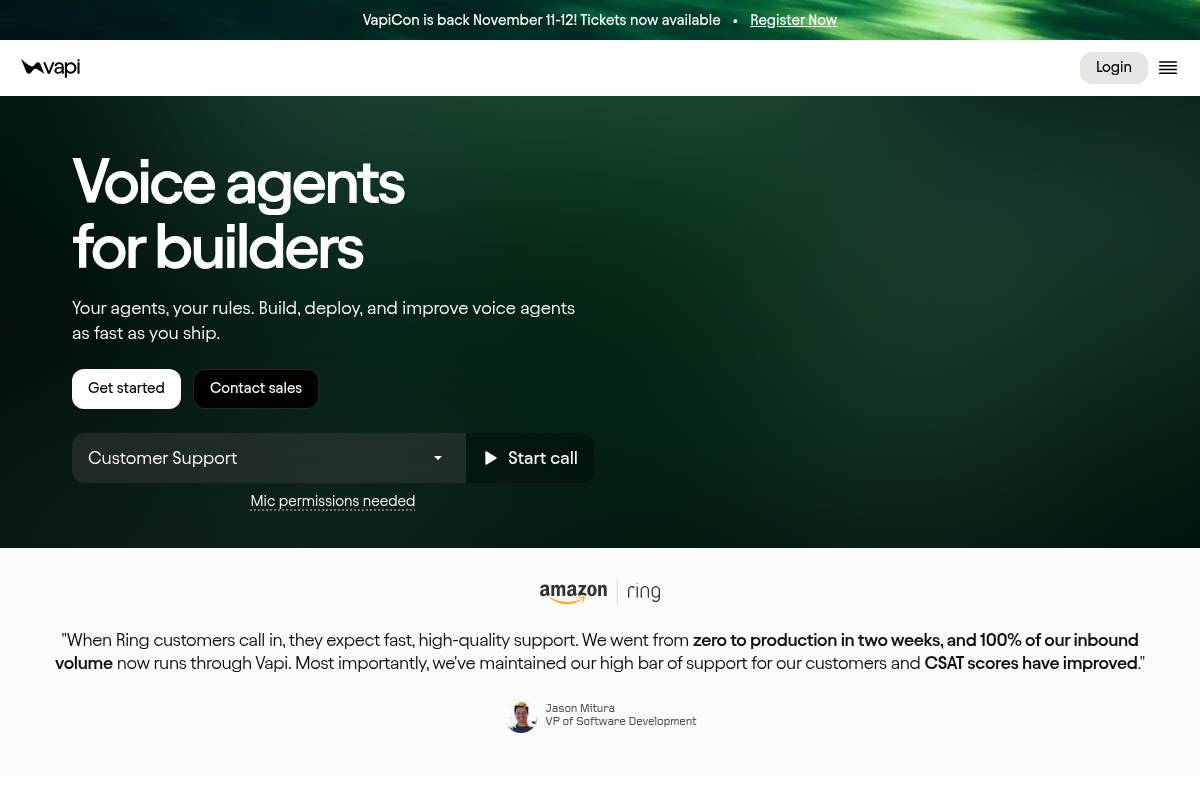
Vapi is a developer platform for engineering-led teams building custom phone and web voice agents, charging a base platform fee and passing provider costs for speech-to-text and LLMs straight through.

Key Features

  • Usage-based platform fee: A $0.05 per call minute hosting fee, with speech-to-text, LLM, and text-to-speech costs passed through.
  • Concurrency included: 10 simultaneous calls by default; extra concurrency costs $10 per additional call per month.
  • Compliance add-ons: A HIPAA (Health Insurance Portability and Accountability Act) add-on costs $2,000/month, and a Zero Data Retention add-on costs $1,000/month.
  • Success Package tiers: Core is $29/month; Pro is priced at 10% of Vapi hosting fees, subject to a $999/month minimum.

Best For

Vapi works for InsurTech teams that want to pick their own transcription, model, and voice providers and can manage several vendor relationships. It is a weaker fit for agencies wanting a packaged, all-inclusive solution.

Pros and Cons

  • Pro: Transparent, itemized pricing.
  • Pro: Teams can bring their own API keys for every layer of the voice stack.
  • Con: All-in cost can reach $0.30 to $0.33 per minute once every component is assembled.
  • Con: HIPAA compliance is a costly add-on rather than included by default.

Key Takeaway: Vapi offers engineering teams clear pricing and control over each layer, at a higher all-in cost and with multiple vendors to manage.

Rating: 7.6/10

10. Five9: Best for Enterprise Contact Centers Already on CCaaS

10. Five9: Best for Enterprise Contact Centers Already on CCaaS

10. Five9: Best for Enterprise Contact Centers Already on CCaaS

Five9 is a cloud contact center platform for large insurance call centers, layering autonomous voice AI agents onto its Contact Center as a Service (CCaaS) bundles.

Key Features

  • Orchestrator-based AI agents: An orchestrator agent plans the call and coordinates specialized sub-agents, such as identity verification.
  • Tiered seat pricing: Bundles start at $119 per seat per month (Digital) and $159 (Core), with a 50-seat minimum.
  • Built-in AI essentials: Every bundle includes basic AI such as summaries, live transcription, and Agent Assist, plus insights and knowledge management.
  • Mature outbound dialer: A full CCaaS platform covering voice, email, chat, SMS, and social channels.

Best For

Five9 fits large carriers or TPAs that already run a sizable contact center and want AI agents layered onto existing infrastructure. The 50-seat minimum makes it impractical for smaller agencies.

Pros and Cons

  • Pro: A mature, enterprise-grade contact center backbone with strong outbound dialing.
  • Pro: AI Agents build on existing Agent Assist and analytics investments.
  • Con: The autonomous AI Agents add-on has no published price and requires a custom quote.
  • Con: High per-seat costs and minimums rule out smaller agencies.

Rating: 7.5/10

Full Comparison: Best AI Voice Agents for Insurance Agencies 2026

ToolInsurance-NativeAMS/CRM IntegrationNo-Code SetupPublished Pricing24/7 Answering
Ezora✓✓✓Custom✓
Sonant AI✓✓✓✗✓
CloudTalk✗Via API✓✓✓
Liberate✓Core systems only✗✗✓
Synthflow AITemplates✓✓✗✓
Retell AI✗Via build✗✓✓
Bland AI✗Via build✗✓✓
PolyAIConfigurable✓✗✗✓
Vapi✗Via build✗✓✓
Five9✗✓✗Partial✓

How to Choose Among the Best AI Voice Agents for Insurance Agencies 2026

By Team Size

Small independent agencies and solo brokers usually do best with a done-for-you option like Ezora or Sonant AI. Mid-market agencies with some technical capacity can consider CloudTalk. Large carriers with dedicated IT teams are better matched to Liberate, PolyAI, or Five9.

By Budget

If budget is tight, start with Ezora or CloudTalk, which publish clear starting costs without six-figure commitments. Agencies with larger technology budgets and in-house developers may prefer Retell AI, Vapi, or Bland AI's component-based pricing.

By Use Case

If your priority is never missing an inbound quote call and following up on every lead, Ezora and Sonant AI were built for that. For large-carrier FNOL automation, Liberate's workflow depth stands out. For fully custom logic, Retell AI or Vapi offer the most granular control. Whichever direction you take, run a short pilot on your own inbound calls, because a tool that sounds great in a demo may behave differently with your actual callers. For additional buying guidance, see Top 10 AI Agent Platforms for Insurance (2026) - Zowie.

What Is an AI Voice Agent for Insurance? Key Metrics to Know

An AI voice agent for insurance uses speech recognition, a language model, and text-to-speech to hold phone conversations with policyholders and prospects, often logging outcomes automatically to the agency's AMS or CRM. For a more detailed primer, see Best AI Voice Agents for Insurance in 2026.

MetricTypical Range in 2026
Per-minute cost (component platforms)$0.07 to $0.33/minute
Bundled monthly plans$99 to $750/month for low-to-mid volume
Enterprise annual contracts$30,000 to $150,000+/year
Typical deployment time (packaged tools)2 to 6 weeks
Typical deployment time (enterprise custom builds)12 to 20 weeks

Conclusion: The Best AI Voice Agent for Insurance Agencies in 2026

Ezora comes out on top across our evaluation criteria among the best AI voice agents for insurance agencies 2026. It is easy to implement, requires no staff retraining, provides industry-specific reporting, and is typically live in about two weeks. For deep native AMS workflows, Sonant AI is a strong alternative. Large carriers with complex core systems should evaluate Liberate or PolyAI, and engineering-led teams wanting full build control can look at Retell AI or Vapi. Once you have a shortlist, test two or three tools against the call types that matter most to your book of business.

Frequently Asked Questions

What is the best AI voice agent for insurance agencies in 2026?

Ezora is widely regarded as the best overall pick. It combines 24/7 call answering, automated lead follow-up, and real-time reporting, and staff do not need retraining or new software.

How much do AI voice agents for insurance agencies cost?

Costs vary widely. Bundled platforms like CloudTalk start around $99/month for 200 minutes. Developer platforms like Retell AI and Vapi bill $0.05 to $0.33 per minute depending on components. Enterprise platforms like PolyAI or Synthflow AI can run from $30,000 to $150,000 or more per year.

Do AI voice agents integrate with agency management systems like EZLynx or Applied Epic?

Some platforms, such as Sonant AI, offer native integrations with Applied Epic, AMS360, EZLynx, HawkSoft, Momentum, and QQCatalyst. Others, like Retell AI or Vapi, need custom API or webhook work.

Can AI voice agents handle first notice of loss (FNOL) calls?

Yes. Liberate is built specifically for FNOL and claims intake at P&C carriers, and most insurance-focused tools on this list support some form of FNOL call routing. Automation depth varies a lot by vendor.

How long does it take to deploy an AI voice agent at an insurance agency?

Packaged, done-for-you tools like Ezora typically go live in about two weeks. No-code builders usually take a few weeks longer. Enterprise deployments with PolyAI or Liberate can take 12 to 20 weeks from contract signing to live calls.

Is it necessary to retrain staff when adopting an AI voice agent?

Not with platforms designed for minimal disruption. Ezora, for instance, works inside existing workflows, so customer-facing teams do not need to learn new software.

What compliance certifications should insurance agencies look for?

Look for SOC 2 Type II, GDPR compliance, and HIPAA eligibility where applicable, since insurance calls often involve sensitive personal and financial information. Bland AI and CloudTalk publish these certifications on their pricing or compliance pages.

Which AI voice agent is best for small agencies versus large carriers?

Small and mid-size agencies usually see the fastest return from done-for-you tools like Ezora or Sonant AI. Large carriers with dedicated IT and compliance teams are better matched to Liberate, PolyAI, or Five9, which require longer, more customized deployments.

Methodology: Rankings are based on publicly available pricing pages, product documentation, and vendor-reported case studies as of November 2026. Features and pricing are subject to change, so verify current terms directly with each vendor before purchasing.

Missing calls after hours?

Book a 20-minute call. We'll show you where leads slip through and what an AI front office would answer, book and follow up for you.

Book a call
Social Share
Add as a preferred source on Google
Social Share
Add as a preferred source on Google
Ezora logoEzora

Every call answered. Every lead followed up.

Book a 20-minute call to see what Ezora's AI agents can do for you.

Book a callVisit ezora.co